
Aortic Valve Surgery

UNDERSTANDING
AORTIC VALVE SURGERY
Minimally Invasive & Open Heart
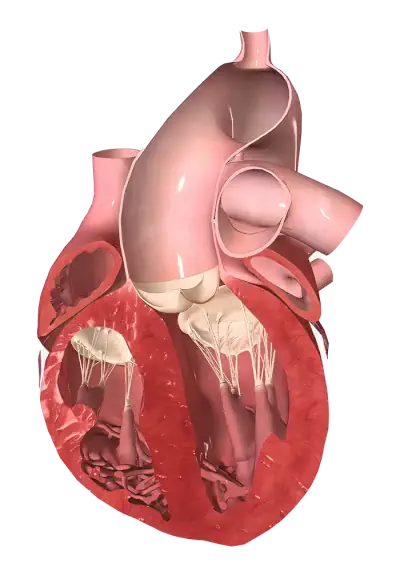
The aortic valve, located at the exit of the left heart chamber, plays a crucial role in ensuring blood flows efficiently from the heart into the aorta. Over time, this valve can become damaged, leading to aortic valve stenosis (blockage) or aortic valve regurgitation (leakage). When these conditions are advanced, valve replacement becomes necessary.
APPROACHES
Minimally Invasive
Involves partially opening the chest bone.
Offers excellent access to the heart and great vessels.
Results in faster recovery and better cosmetic outcomes.
A 4-6 cm incision between the 2nd and 3rd ribs without touching the chest bone.
Favoured by patients for its minimal invasiveness.
Suitable for patients with singular aortic valve problems, provided they meet specific anatomical criteria determined by a CT scan.
Performed through a tiny incision (3-5 cm) without cutting or mobilising any bone.
Utilises an endoscopic camera for enhanced precision.
Open Heart
Involves a vertical incision along the chest to open the chest bone.
Provides the surgeon with a direct and unobstructed view of the heart and aortic valve.
Allows for comprehensive treatment of complex heart conditions that may not be suitable for minimally invasive techniques.
CONDITIONS TREATED
Surgery is recommended for patients with:
Minimally Invasive
- Aortic Valve Stenosis (Narrowing of The Aortic Valve)
- Aortic Valve Regurgitation (Leaking of The Aortic Valve)
- Combined Heart Conditions Requiring Surgical Intervention
Open Heart
- Aortic Valve Stenosis (Narrowing of The Aortic Valve)
- Aortic Valve Regurgitation (Leaking of The Aortic Valve)
- Combined Heart Conditions Requiring Simultaneous Surgical Intervention (E.g. Heart Valve & Bypass Surgery At The Same Time)
- Complex Anatomical Considerations That Preclude Minimally Invasive Options
WHAT TO EXPECT
Minimally Invasive
- Thorough evaluation including detailed medical history, physical examination, and advanced imaging (e.g. CT scan) to tailor the surgical plan.
- Consultation with (Adj) Professor Theo Kofidis to discuss minimally invasive & open heart options, their potential benefits & risks, and if patient qualifies for minimally invasive surgery.
Open Heart
- Thorough evaluation including detailed medical history, physical examination, and advanced imaging (e.g. CT scan) to tailor the surgical plan.
- Consultation with (Adj) Professor Theo Kofidis to discuss minimally invasive & open heart options, their potential benefits & risks, and if patient qualifies for minimally invasive surgery.
Minimally Invasive
- General anaesthesia is administered.
- Precise repair or replacement of the aortic valve through small incisions, minimising trauma to surrounding tissues.
- Advanced technologies like Sutureless Aortic Valves (Perceval) and Cor-Knot Device (automated knot tying device) may be utilised for enhanced precision and efficiency.
Open Heart
- General anaesthesia is administered.
- Aortic valve repair or replacement performed through the open heart approach, involving opening the chest cavity.
- Application of advanced surgical methods to ensure accurate procedure execution and optimal outcomes.
Minimally Invasive
- Usually 1 day in ICU & 3-4 days in general ward.
- Faster mobilisation and return to daily activities.
- Follow-up appointments to monitor healing progress and overall cardiac health.
Open Heart
- Usually 2 days in ICU & 5-7 days in general ward.
- Slower mobilisation while in recovery.
- Follow-up appointments to monitor healing progress and overall cardiac health.
BENEFITS
Minimally Invasive
Less pain & quicker recovery period.
Results in smaller scars that are less visible.
Regain strength and mobility faster, allowing you to resume normal activities sooner.
Smaller incisions reduce the risk of post-surgical infections, leading to safer recovery.
Minimises blood loss, decreasing the need for transfusions.
Reduced physical trauma to the body facilitates quicker healing and less post-operative pain.
Lowers the likelihood of irregular heartbeats, enhancing overall cardiac stability post-surgery.
Preserving chest structure promotes improved lung function and breathing capacity shortly after surgery.
Smaller incisions result in less visible scarring, maintaining a more natural appearance.
Open Heart
In cases where the heart anatomy is complex or the arteries are severely diseased, open heart surgery may offer a more reliable option for complete revascularization.