
Mitral Valve Surgery


UNDERSTANDING
MITRAL VALVE SURGERY
Minimally Invasive & Open Heart
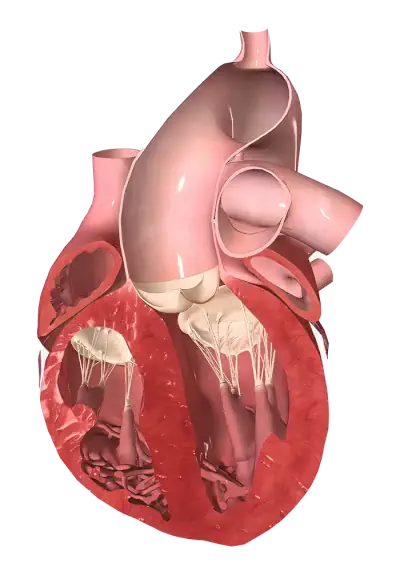
The mitral valve is crucial for maintaining proper blood flow between the left atrium and ventricle of the heart. When this valve becomes diseased — leading to conditions like mitral valve regurgitation or mitral valve stenosis — surgical intervention may be necessary to repair or replace the valve.
APPROACHES
Minimally Invasive
A 4-6 cm incision between the 2nd and 3rd ribs without touching the chest bone.
Favoured by patients for its minimal invasiveness.
Performed through a tiny incision (3-5 cm) between the ribs, without cutting or mobilising any bone.
Utilises an endoscopic camera for enhanced precision.
Open Heart
Involves a vertical incision along the chest to open the chest bone.
Provides the surgeon with a direct and unobstructed view of the heart and mitral valve.
Allows for comprehensive treatment of complex heart conditions that may not be suitable for minimally invasive techniques.
CONDITIONS TREATED
Surgery is recommended for patients with:
Minimally Invasive
- Mitral Valve Regurgitation
- Mitral Valve Stenosis
Open Heart
- Mitral Valve Regurgitation
- Mitral Valve Stenosis
- Complex Mitral Valve Disease with Multiple Co-Existing Diseases
WHAT TO EXPECT
Minimally Invasive
- Thorough assessment including medical history, physical examination, and advanced imaging (e.g., echocardiogram, CT scan).
- Consultation with (Adj) Professor Theo Kofidis to explore minimally invasive & open heart options, their potential benefits & risks, and if patient qualifies for minimally invasive surgery.
Open Heart
- Thorough assessment including medical history, physical examination, and advanced imaging (e.g., echocardiogram, CT scan).
- Consultation with (Adj) Professor Theo Kofidis to explore minimally invasive & open heart options, their potential benefits & risks, and if patient qualifies for minimally invasive surgery.
Minimally Invasive
- General anaesthesia is administered.
- Precise repair or replacement of the mitral valve through small incisions, minimising tissue trauma.
Open Heart
- General anaesthesia is administered.
- Mitral valve repair or replacement performed through open-heart surgery, which involves opening the chest cavity.
Minimally Invasive
- Usually 1 day in ICU & 3-4 days in general ward.
- Faster mobilisation and return to daily activities.
- Follow-up appointments to monitor healing progress and overall cardiac health.
.
Open Heart
- Usually 2 days in ICU & 5-7 days in general ward.
- Slower mobilisation while in recovery.
- Follow-up appointments to monitor healing progress and overall cardiac health.
BENEFITS
Minimally Invasive
Less pain & quicker recovery period.
Results in smaller scars that are less visible.
Regain strength and mobility faster, allowing you to resume normal activities sooner.
Smaller incisions reduce the risk of post-surgical infections, leading to safer recovery.
Minimises blood loss, decreasing the need for transfusions.
Reduced physical trauma to the body facilitates quicker healing and less post-operative pain.
Lowers the likelihood of irregular heartbeats, enhancing overall cardiac stability post-surgery.
Preserving chest structure promotes improved lung function and breathing capacity shortly after surgery.
Smaller incisions result in less visible scarring, maintaining a more natural appearance.
Open Heart
In cases where the heart anatomy is complex or the arteries are severely diseased, open heart surgery may offer a more reliable option for complete revascularization.